
Active
Flowline Pigs - Dissolvable
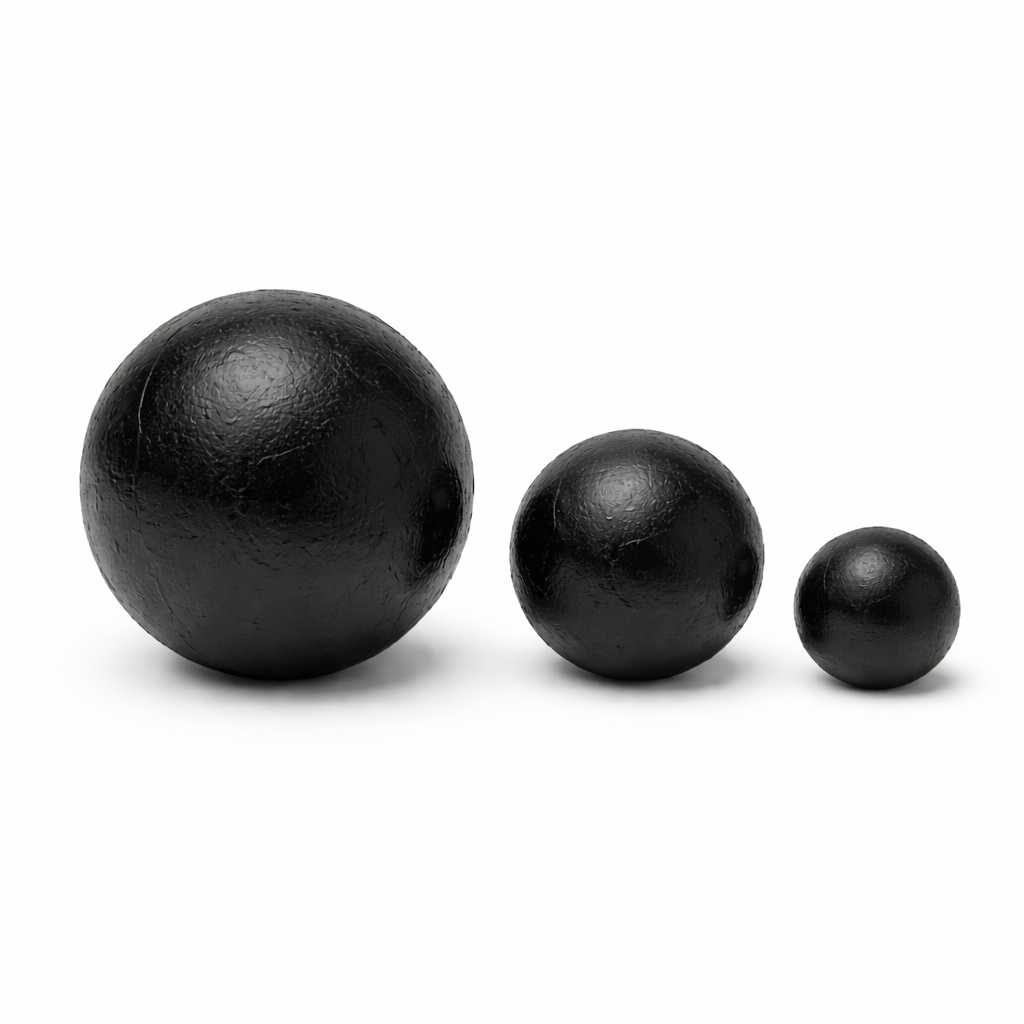
from
$2.00
Dissolvable flowline pigs.

Flowline Pigs - Dissolvable
Flowline Pigs - Dissolvable
| Variant | Price | Qty | |
|---|---|---|---|
|
1 1/2" Sch 40
|
$4.00 |
|
|
|
1 1/4" Sch 40
|
$3.00 |
|
|
|
1" Sch 40
|
$2.00 |
|
Description
Dissolvable flowline scraper balls are hands down the most cost effective way to remove paraffin buildup in pipes. They are easy to launch and don't require a catcher. The scraper balls can go around 90 degree turns that may stick rubber or plastic pigs. They are very inexpensive compared to rubber or plastic pigs or hot-oil treatments. Scraper balls do not interfere with other production and pipeline chemicals.
The balls contain paraffin inhibitor and pour point depressant. The residual traces of inhibitor help prevent re-deposition of paraffin for a short period of time. The pour point depressant helps the oil that contacts the pig flow easier at lower temperatures.
The dissolving rate of the balls is a function of fluid temperature, relative fluid movement, friction, and absorbability of the crude. These conditions vary greatly with each system. The melting point is about 145F. Scraper balls will dissolve in fluids with temperatures below their melting point (just at a slower rate). Some fluid movement past the pig is necessary to dissolve the pigs if the fluid temperature is below the pig?s melting point.
The number of scraper balls to be used is based on the amount of accumulation, length of pipe, temperature of fluid and other factors. Field experience indicate and that in short lines (500 feet or less) usually require 1 to 5 balls and longer lines (500 feet or more) usually require 5 to 10 or more balls. Regular periodic pigging is recommended to keep lines clean and prevent paraffin from becoming too hard or thick to remove. PROCEDURE Insert scraper balls (one at a time) through a launcher then pump through system and continue running balls (one at a time) into the line until:
Scraper balls can also be drilled in the center from each end; but leave an area in the center that is not drilled. This allows circulation to be established by raising pressure and breaking un-drilled portion of ball (center of the ball).
The balls contain paraffin inhibitor and pour point depressant. The residual traces of inhibitor help prevent re-deposition of paraffin for a short period of time. The pour point depressant helps the oil that contacts the pig flow easier at lower temperatures.
The dissolving rate of the balls is a function of fluid temperature, relative fluid movement, friction, and absorbability of the crude. These conditions vary greatly with each system. The melting point is about 145F. Scraper balls will dissolve in fluids with temperatures below their melting point (just at a slower rate). Some fluid movement past the pig is necessary to dissolve the pigs if the fluid temperature is below the pig?s melting point.
The number of scraper balls to be used is based on the amount of accumulation, length of pipe, temperature of fluid and other factors. Field experience indicate and that in short lines (500 feet or less) usually require 1 to 5 balls and longer lines (500 feet or more) usually require 5 to 10 or more balls. Regular periodic pigging is recommended to keep lines clean and prevent paraffin from becoming too hard or thick to remove. PROCEDURE Insert scraper balls (one at a time) through a launcher then pump through system and continue running balls (one at a time) into the line until:
- no additional decrease in flowing pressure or
- no additional increase in flowing rate or
- no additional accumulation is removed downstream.
Scraper balls can also be drilled in the center from each end; but leave an area in the center that is not drilled. This allows circulation to be established by raising pressure and breaking un-drilled portion of ball (center of the ball).